A single serious OSHA violation now costs up to $16,550. A willful violation can run up to $165,514. And that's only the fine, before you add the insurance premium increase, the EMR hit, and the three-day stop-work order that costs more than the penalty itself.
This guide covers the 2026 penalty schedule, the violations inspectors are writing up most often, and how to build a compliance program that protects your people and your margins.
The 2026 Penalty Schedule
OSHA penalties adjust annually under the Federal Civil Penalties Inflation Adjustment Act. This is where things stand as of January 2025 (carrying into 2026):
Serious / Other-Than-Serious violations: Up to $16,550 per violation
Willful violations: $11,823 to $165,514 per violation
Repeat violations: Up to $165,514 per violation
Failure to abate: Up to $16,550 per day beyond the abatement date
Those are maximums. In practice, OSHA applies a gravity-based penalty structure: high gravity runs $16,550, moderate gravity lands between $9,457 and $14,187, and low gravity starts at $7,093. Reductions of up to 95% are possible based on employer size, good faith compliance efforts, and violation history.
What most GCs underestimate is that the fine is the smallest cost. A serious violation with an injury can bump your EMR by 0.10 to 0.25 points, which means a 10 to 25% insurance premium increase, and that increase sticks for three years. On a company with a $100,000 annual premium, one bad citation costs $45,000 in insurance alone, on top of the fine.
The Violations Inspectors Are Writing
Fall protection has led OSHA's top 10 list for 15 consecutive years. In FY 2025, 1926.501 (Fall Protection: General Requirements) racked up 5,914 citations. Nearly six thousand citations for the same standard, year after year.
The full FY 2025 construction-relevant top 10:
1. Fall Protection: General Requirements (1926.501): 5,914 citations. Missing guardrails, no safety nets, absent personal fall arrest systems. This violation keeps writing itself because contractors keep skipping the basics.
2. Hazard Communication: 2,546 citations. Missing Safety Data Sheets, improper chemical labeling, no training on hazardous materials.
3. Ladders (1926.1053): 2,405 citations. Wrong angle, no tie-off at the top, defective equipment still in use. Ladder violations are the easiest citations for an inspector to write.
4. Scaffolding (1926.451): 1,905 citations. Improper access points, incomplete platform planking, unstable foundations, missing guardrails on elevated platforms.
5. Fall Protection: Training (1926.503): 1,907 citations. You can have all the fall protection equipment on site and still get cited if your training documentation isn't current.
6. Respiratory Protection: 1,953 citations. Missing fit-testing records, no medical clearance, inadequate training.
7. Eye and Face Protection: 1,665 citations. Missing or damaged safety glasses, no face shields where required.
The pattern is plain enough: falls, PPE, and documentation failures account for most citations. These aren't exotic hazards. They're the fundamentals.
The Fatal Four: What's Killing Construction Workers
Construction accounts for roughly 20% of all U.S. workplace fatalities, about 1,075 deaths in 2024. One in five. The Fatal Four categories account for more than 60% of those deaths:
Falls (38.5 to 39.2%): Still the number one killer. Falls from heights accounted for 189 OSHA-investigated fatalities in FY 2024, down from 234 the prior year. That's progress, but the number is still far too high.
Struck-By (12 to 15%): Heavy machinery, cranes, and trucks are involved in 75% of struck-by fatalities. Equipment blind spots and inadequate spotting are the usual causes.
Electrocutions (~9%): Contact with overhead power lines and live electrical systems.
Caught-In/Between (~1.4%): Workers trapped between equipment, materials, or collapsing structures.
If you eliminated the Fatal Four, you'd prevent more than 600 construction deaths per year, which is 600 families.
New Regulations You Need to Know About
Heat Illness Prevention (Coming Soon)
OSHA published a Notice of Proposed Rulemaking for heat illness prevention on August 30, 2024. The public comment period closed October 30, 2025, and the final rule is expected in 2026.
When it arrives, this is what it will likely require:
Written heat illness prevention plans for every site with outdoor or high-heat indoor work. Mandatory hydration protocols, with free water access within a specified distance of every worker. Shaded rest areas. Acclimatization procedures for new or returning workers (the first two weeks on a hot site are the most dangerous). Environmental monitoring and heat index tracking. Expanded supervisor training.
If you're not already doing most of this, start now rather than waiting for the rule.
Silica Exposure (Ongoing Enforcement Push)
The crystalline silica standard (29 CFR 1926.1153) isn't new, but enforcement is picking up. The respirable silica limit is 50 µg/m³ over an eight-hour time-weighted average. Every concrete cutting, demolition, and grinding operation needs engineering controls: dust collection, wet cutting, enclosed cabs.
Insurance carriers are now specifically flagging silica citations, and those flags affect your EMR for multiple policy years. A single silica violation can cost you far more in insurance than in fines.
Trenching and Excavation (Always on the Radar)
Twelve workers died in excavation-related incidents in 2024, and OSHA issued 629 citations. The rules haven't changed. Trenches five feet or deeper need a protective system (shoring, sloping, or trench boxes) unless you're in stable rock, and a competent person must inspect daily.
What has changed is enforcement intensity. OSHA treats excavation fatalities as priority investigations, and the penalties tend to run toward the maximums.
The Real Cost of Non-Compliance
Here is what a single serious violation costs a mid-size GC once you add everything up.
The fine itself: $5,000 to $16,550 (after reductions for a first-time offender)
EMR impact: A serious violation with injury bumps your EMR by 0.10 to 0.25 points, translating to a 10 to 25% premium increase for three years. On a $100,000 annual premium, that's $30,000 to $75,000 over the three-year period.
Stop-work order: If OSHA shuts you down for three days, you're looking at $20,000 to $100,000 in idle labor and equipment costs, plus corrective measures running $2,000 to $50,000.
Project disqualification: Major owners and prime contractors now check OSHA records when vetting subs. An active citation can cost you a bid worth $500,000 to $5 million. Bonding companies review your OSHA history too, and a bad record makes it harder and more expensive to bond your next project.
Insurance market access: After multiple violations, carriers may restrict your coverage terms, increase deductibles, shorten renewal periods, or drop you entirely. In the current hard market, losing your incumbent carrier can mean a 50 to 100% premium increase just to find replacement coverage.
Total realistic cost of one serious violation: $50,000 to $200,000+ when you add up fines, insurance, downtime, and lost opportunities over a three-year window.
Building a Compliance Culture (Not Just a Compliance Program)
There's a difference between having a safety program and having a safety culture. The program lives in a binder. The culture lives on the jobsite.
Companies with strong safety cultures see 30 to 50% fewer OSHA violations than their peers. This is how they do it.
Make Safety a Leadership Function, Not a Paperwork Function
If your safety program is run by one overloaded safety director filling out forms, you don't have a safety culture. You have a documentation exercise.
Safety culture starts when the super walks the site with the same attention as the safety director, and when the PM asks about near-misses in the morning meeting alongside schedule progress. It shows when the owner turns up on site and asks about safety before asking about the schedule.
Run Toolbox Talks That Don't Put People to Sleep
Five-to-ten minute daily talks, focused on the specific hazards of that day's work, not a generic script someone downloaded off the internet. If you're pouring concrete today, talk about silica, fall protection at the edge, and heat stress. If you're setting steel, talk about crane signals, rigging, and dropped objects.
The best toolbox talks include a question: "What's the most dangerous thing we're doing today?" Let the crew answer. They know the jobsite better than anyone.
Track Certifications Digitally
After fall protection, the next most painful OSHA citation category is training documentation. You can have the best-trained crew in the state, but if you can't prove it during an inspection, you're getting cited.
Digital certification tracking, meaning you know exactly which workers hold which certifications, when they expire, and who needs renewal, is the difference between a clean inspection and a 1926.503 citation. A certification tracker built for construction should do exactly this: track every certification, send expiration alerts, and give you a compliance view across all your sites.
Use Technology for Real-Time Compliance
Paper-based safety programs are reactive by definition. Something goes wrong, someone fills out a form, and the information reaches management days later.
AI-powered camera systems reverse that. A camera that detects a worker without a hard hat and sends an alert in seconds is a different thing from a safety officer who spots the same violation on a walkthrough three hours later.
The same logic applies to digital daily inspections, automated hazard tracking, and incident reporting from the field. The faster you catch a problem, the cheaper it is to fix, and the less likely it turns into a citation or a fatality.
Treat Subcontractor Safety as Your Problem
As a GC, you're responsible for jobsite safety, and that includes your subs. The best compliance programs include subcontractor vetting (OSHA record checks, insurance verification, safety plan review) before they set foot on your site.
Require orientation for every sub crew, document it, and track it. If a sub has active OSHA citations, that's something to address before mobilization rather than after.
The Inspection: What to Expect and How to Handle It
OSHA inspections aren't random. Most are triggered by a complaint, a referral, a fatality, or a targeted emphasis program. This is what happens and how to respond.
Before the Inspector Arrives
Have your documentation ready and accessible, not buried in a filing cabinet at the home office. That means training records, daily inspection logs, toolbox talk sign-in sheets, hazard communication plans, and your OSHA 300 log. Digital systems that keep everything in one place make this much easier.
Designate a competent person to accompany the inspector. This should be someone who knows the site, knows the standards, and can answer questions without volunteering information that wasn't asked for.
During the Inspection
Be cooperative but measured. Answer questions directly and honestly. Don't speculate, don't argue, and don't lie. If you don't know the answer to a question, say so. "I'll need to check on that and get back to you" is a perfectly acceptable response.
Take your own photos and notes of everything the inspector photographs or documents. You'll want your own record if you decide to contest a citation.
After the Inspection
If you receive citations, you have 15 business days to contest. Whether to contest depends on the severity and your confidence in your documentation. For serious or willful citations, consult with legal counsel before responding.
Fix the cited conditions immediately, regardless of whether you plan to contest. Abatement is your first obligation, and failure-to-abate penalties accrue daily.
Your 2026 OSHA Compliance Checklist
A practical checklist for GCs who want to stay ahead of enforcement:
Documentation: Are all training records current, accessible, and organized by worker and by site? Can you produce them within 30 minutes of a request?
Fall protection: Is every worker above six feet protected? Are guardrails, nets, or PFAS in place everywhere they're required? Is your fall protection training documented and current?
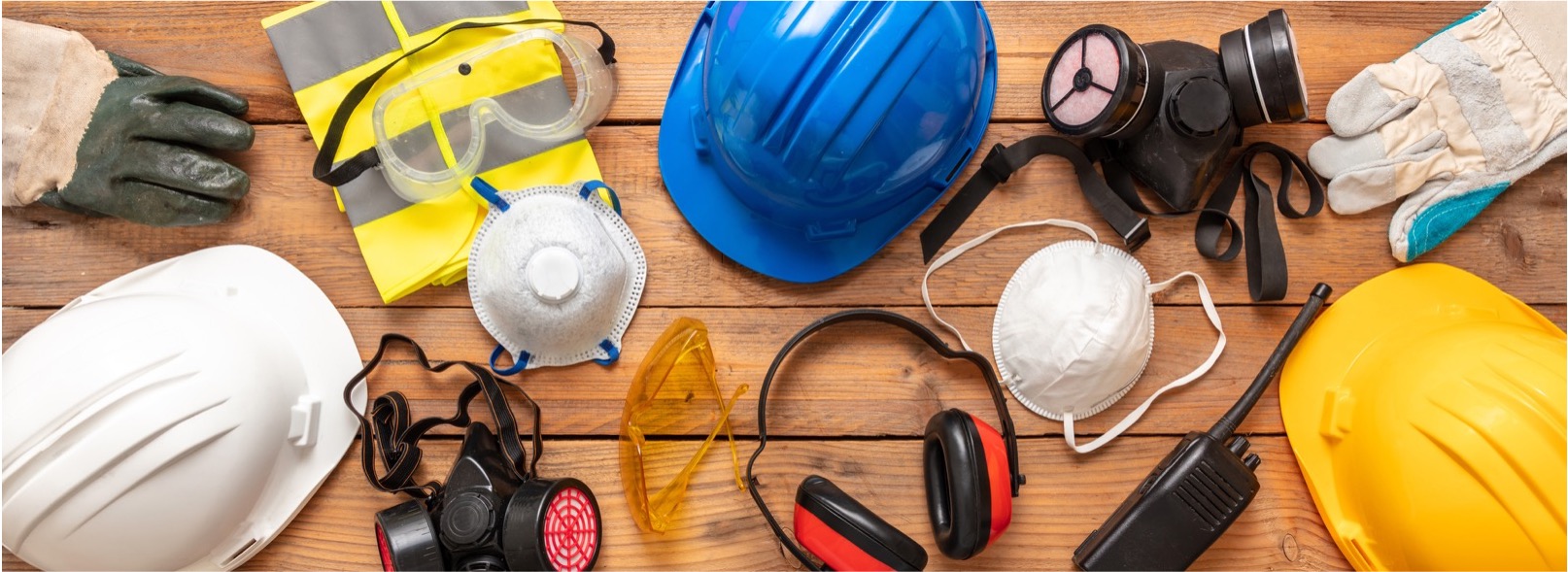
PPE: Are hard hats, safety glasses, hi-vis vests, and hearing protection available, worn, and in good condition across every site?
Hazard communication: Is your written HazCom plan current? Are Safety Data Sheets accessible on every site? Is every worker trained on the chemicals they might encounter?
Scaffolding and ladders: Are scaffolds erected by competent persons? Are ladders inspected, properly angled, and secured? Are damaged items tagged and removed?
Excavation: Is a competent person inspecting every trench daily? Are protective systems in place for everything five feet or deeper?
Certifications: Do you know the expiration date of every OSHA card, crane certification, forklift license, and confined space permit across your workforce?
Subcontractors: Have you verified OSHA records, insurance, and safety programs for every sub on your sites?
If you can't answer "yes" to all of these, you've got work to do before your next inspection.
Built by people who have run sites. Vendoor makes plain tools for the people who run construction sites. The first one you can order today is VendoorHub, a self-contained jobsite camera trailer with Starlink internet and smart alerts, $1,495 a month per trailer, everything included. See the trailer →
Sources: OSHA penalty schedules (January 2025), OSHA FY 2025 top 10 citations data, Bureau of Labor Statistics fatality data, Safety and Health Magazine, Contractor Magazine, Federato insurance impact analysis. All statistics current as of February 2026.
Related reading: AI on the Jobsite: What Construction Companies Actually Need to Know | Construction Cameras: The Buyer's Guide for 2026 | OSHA Violation Cost Calculator